INTERVIEW WITH MK DR. EINAT WILF
DIMPOOL INTERVIEW SERIES
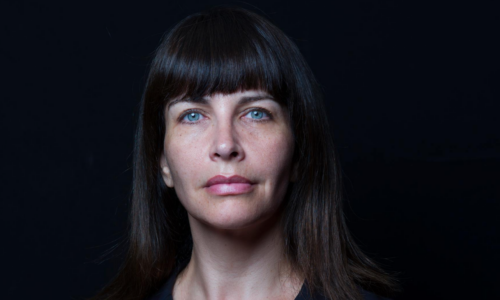
About Dr. Einat Wilf
Dr. Einat Wilf is a Member of Israel’s Knesset and Chair of the Knesset’s Education, Sports and Culture Committee. She also serves on the influential Foreign Affairs and Defense Committee and is the Chair of the Knesset Sub-Committee for Israel and the Jewish People.
Previously, Dr. Wilf served as a Senior Fellow with the Jewish People Policy Planning Institute, a Foreign Policy Advisor to Vice Prime Minister Shimon Peres and a strategic consultant with McKinsey & Company. Born and raised in Israel, Dr. Wilf served as an Intelligence Officer in the Israel Defense Forces and holds a BA in Government and Fine Arts from Harvard University, an MBA from INSEAD in France, and a PhD in Political Science from the University of Cambridge.
Dr. Wilf is the author of two books that explore key issues in Israeli society. Her first book, “My Israel, Our Generation”, is about Israel’s past and future from the perspective of the younger generation. It is available in Hebrew and English. Her second book, “Back to Basics: How to Save Israeli Education (at no additional cost)”, offers a detailed and feasible policy proposal for saving Israel’s ailing education system. It is available in Hebrew and Russian.
Political Journey
Dimpool: As an independent center we thought it would be suitable for us to interview one of the 5 Independence Party members of the Knesset. When we researched you and your career before your parliamentary membership, we realized that you are one of the few people who have an incredibly successful academic, military and business career, so our question is, have you always thought about being in a political area during your academic life, is this planned or did the events took you to a political career?
MK Dr. Einat Wilf: I was always interested in public service. Especially in diplomacy, in foreign affairs and international issues, certainly anything that involves Israel and foreign policy. At one point I just realized that, despite all the bad things that people say about politics, I want to do the thing I care about and that I am interested in, this is where I have to be. And I also realized that politics is not as bad as people made it out to be, so I always knew I want to be in public policy and at one point it just became clear that politics had to be the way to go there.
Establishing the Independence Party
Dimpool: And after the beginning of your political journey, in a short time period you took an active role in establishing the Independence Party. How would you define that period, splitting the Labour Party and forming a new party? Did you face any difficulties during the process?
MK Dr. Einat Wilf: It was certainly a dramatic move and we all faced a lot of criticism, many people felt this hurt the Labour Party. Even though my personal view, and I think it has been proven correct, was that this was a necessary move that, both halfs, both sides of the Labour Party could go through a process of renewal. Because the party was suffering tremendous difficulties, it was in a process of long term decline, it was getting deeply dysfunctional and I found that the split was the only way to begin a new path, so I thought it was a simple decision in the sense that I felt there was no other way forward. But, it was certainly the one that accompanied by a lot of criticism.
About the Upcoming Elections
Dimpool: As a member of Independence party, what can you tell us about your expectations regarding the upcoming elections? Is there a chance that we can see you in the 33rd Government of Israel?
MK Dr. Einat Wilf: I would certainly love to continue, I think there is a good chance of it but it is not going to happen without a lot of hard work. I do not know if you had a chance to follow the news last week, all of us still very much are processing this dramatic announcement that the Likud Party and Lieberman‘s Yisrael Beitenu Party are joining forces. It is a big change and it has thrown a political map into a bit of a turmoil, so right now I think there will many developments between now and elections, it is difficult right now to say how the political map will look on the day of elections. But I certainly feel that we are part of a parties that -when we split the Labour Party, we took with us what was considered the more security, defense foreign policy and perhaps a little hawkish oriented section of the Labour Party and this is very much missing now. In many of the parties that are last of the Likud, Ehud Barak is of course the Defense Minister is one of the very few personalities that are considered right now eligible for major leadership and defense position in any Israeli government, so I think we are a small team with a lot of substance and I believe that this will certainly matter in the upcoming elections, but the political map is still changing and to continue my work I will have to work hard in the next few months.
Dimpool: What would be your most important agenda if you got reelected in the upcoming elections?
MK Dr. Einat Wilf: I plan to continue the thing that I have begun in this. First of all foreign policy will always continue to be my focus and that would be the defense of Israel on the international arena to combat various efforts to undermine Israel in the public opinion in the international bodies. Domestically my main focus is on education, especially on public education in defending teachers and defending of teachers and I also did a quite a bit work on the structure of the Israeli economy, making sure we have certain sectors of the Israeli economy that are not competitive -some sectors are very competitive but some are not- and there is a concentration of wealth and concentration of economic control in the hands of the few, and I do a lot of work to ensure that our economy is more open and more competitive and less rent-seeking.
Israeli Foreign Policy
Dimpool: Although you entered the Knesset in 2010, you became one of the most influential Israeli politicians regarding foreign policy and middle eastern politics so, considering your policy advisor career, how would you define and describe Israel’s foreign policy today?
MK Dr. Einat Wilf: Well, Israel’s foreign policy always from day one was geared to one thing, first and foremost which was most simply survival, towards building its power and its strength in what it is considered a hostile area, towards insuring that it has powerful allies among the great powers -that is of course, first and foremost the U.S. but certainly in Europe and around the world-. This continues to be the cornerstone of Israel’s foreign policy. It is true that over the decades, economics have become a bigger part of the foreign policy and opening new markets making sure that Israel economy is open and integrated in to the world economy, has and over the years become a more important part of Israel’s foreign policy, but the cornerstone continues to be to secure Israel’s survival in the Middle East, to secure its strength and to ensure powerful allies.
Arab Spring and Israel
Dimpool: In one of your speeches I heard that you described the Arab Spring as a once in a century event. And we completely agree that, it was unbelievable for people to rise up against the undemocratic regimes against the dictatorships. As a result the regimes changed, the leaders have fallen, so basically everything changed except one thing, the anti-Semitism is still in raise. In your opinion what is the reason of that situation? Why the hatred towards Israel never changes in the region?
MK Dr. Einat Wilf: First I also defined it as a once in a century event, literally my argument is that the Arab spring as much about the sweeping away of the post World War One order, which was created after the fall of the Ottoman Empire, and this is why we are seeing so many of old, ethnic and tribal and religious and sectarian tensions bubble up after they were kind of kept under a lead of dictatorship for about a century. But first of all when we talk about anti-Semitism, anti-Semitism has no logic to it. A few studies the history of it in the western world certainly you will see that Jews were hated when they were poor and when they were rich, they were hated when they were different, when they were like us, when they were socialists and when they were capitalists. It has no logic; it is one of the most remarkable, disturbing human phenomena of centuries. It is certainly very strong in the Arab world in ways that we do not even see any more in the West. In televisions and in newspapers you see things that are typical of 1930s Germany in terms of their portrayal of Jews and Israel and Zionists. I know that people say it is because of the conflict, because of the Palestinians, but it is like arguing it is because Jews are poor, rich or socialist or capitalist, it is not a real explanation, it is something that I think of beyond rationality. What I do think important is that at least more and more of the World recognizes now that the problems of the Arab world has nothing to do with Israel, nothing to do with the conflict. The problems are poverty, the literacy, the religious intolerance, sectarian and tribal rivalries, treatment of women, minorities. I think there is an understanding now that any efforts tried to blame Israel is merely an excuse and has nothing to do with real problems and hopefully the Arab Countries will sort this on their domestic problems and not look outside certain to blame.
Dimpool: Do you think that Israeli foreign Ministry is carrying out a successful mission during the Arab spring, in order to fight against anti-Semitism and anti-Zionism?
MK Dr. Einat Wilf: It is a very difficult job, certainly in the Arab world and at this point you can never fight anti-Semitism just from without, you need people from within the society to seal that this is a sickness, that this is wrong so, my guess is this will continue to be a sickness of the Arab world until they develop more of the society but I do not think a small ministry of Israel can successfully combat that.
Dimpool: So it has to be a coalition work or an alliance work?
MK Dr. Einat Wilf: Yes, it certainly has to be an international alliance, certainly more and more of the world has to recognize what is going on inside the Arab world, there is a tendency sometimes to be very forgiving to excuse phenomena such as anti-Semitism, such as discrimination against women, against minorities. There is sometimes a tendency to forgive in to have very low expectations of the Arab world, I think this is a huge mistake and some of our responsibility is to bring attention at the world at large and build alliances that also was in the Arab world hopefully one day against this sickness.
Israeli – Turkish Relations
Dimpool: As you mentioned international allience against that anti-Semitism sickness, it brings to us to Israeli – Turkish relations. We all know that the relations hit all-time low recently. We are not going to ask how two countries reached this point, but at the moment we see that two countries have similar opponents in the area. Turkish – Iranian relations is worse than ever, and with Syria, Turkey is on the brink of a war. But at the same time there is no progress in the Turkish Israeli relations even though they have a lot in common. So do you think it would be wise to think that two countries should forget their past and should start to act together in the region?
MK Dr. Einat Wilf: We certainly in Israel have nothing against Turkey and Turkish people and naturally would love to see the relationship become stronger. The sense is simply that the relationship has been used by the Turkish government as the way to appeal to the Arab and the Muslim world. Clearly as part of the Arab spring, as part of the sweeping away of the post Ottoman Empire World order, what you are seeing is a battle for regional hegemony between Turkey, between Iran, Saudi Arabia, a little bit Egypt, everyone is playing this game of regional power. In many ways Israel is just a very easy way to establish yourself as a leader in the Arab world and in the Muslim world and I think this is what happened. Turning against Israel was just a very easy way for the Turkish government and the Turkish President to say “see we are leader of the Arabs, we are leaders of the Muslims”. I do not know if this will change. And regarding Turkey’s demand for an apology: Israelis generally do not feel that they did anything wrong, they feel that this was a breach against them, against their policy, they acted in self defense and they feel the demand for an apology is not real. It has intended as a matter of humiliation against Israel, to show the power of Turkey in the region. If there is a real interest in renewing the relationship and the friendship, and not just using Israel as a way to show power in the Arab and Muslim world, I am sure the relationship will grow the warm again.
Dimpool: You mentioned that Turkish government is using its relations with Israel in order to appeal to the Arab world and to be the leader of the Arab world, yet when we look at the beginning of the deterioration of the Turkish – Israeli relations we saw that it started with Davos incident, and followed by Mavi Marmara and many analysts state that the AKP is using Turkey’s foreign policy as a tool for domestic policies so when the AKP bashes Israel openly, it gains votes in the Turkish public, so in your opinion, what is the reason for that public behavior? Why the sudden change?
MK Dr. Einat Wilf: Well, here I must admit I do not know very much inside Turkey, a bit of one I have been reading is that in general the rise of the AKP represents a shift in Turkish society towards the more rural, the more religious, the more kind of traditional and perhaps for them this Israel bashing is a way to build their sense of power their sense of pride. I am just speculating, I do not know enough, and again it is not real, to try to build something on going against Israel, on going against Zionism, on going against Jews, it is not real. It is not something constructive.
Dimpool: At the end of our interview we would like to thank you for your precious time, Thank you very much again.
You can follow MK Einat Wilf on Twitter @EWilf and on Facebook facebook.com/einat.wilf
The Independence faction can be followed on Twitter @hatzmaut and on Facebook facebook.com/haatzmaut